

Moon Beast Productions have been on a small blitz recently (when it looked like their Kickstarter was stalling out a few days ago). They resumed the $25 special (which ended on February 22nd) and added a few perks for each tier (promising more additions).
Additionally, the former CEO of Grinding Gear Games (Path of Exile) Chris Wilson, had the three principals of Moon Beast Productions on as guests where they answered some questions about their time at Blizzard North and the work they did on Diablo/Diablo II (as well what they’ve been doing since).
Wilson has long been enamored with Diablo/Diablo II (since it was the main reason he ended up starting his own company in order to make a spiritual successor to D2:LOD). The deal with Tencent acquiring the majority of the Grinding Gear Games in 2018, secured Wilson financially (the three original founders ended up selling their remaining stake to Tencent in 2024).
While I was familiar with Hu and Schaefer, I didn’t really know much about Shenk (and learned about his contributions); it was an overall enlightening chat to learn what their approach is for Darkhaven.
I like their rationale regarding why the modding portion being a key pillar of the design (where Shenk highlighted that a lot of the innovation in gaming came about from mods for various games and like how mods inspired new genres and titles; a good example being the Warcraft III mod that resulted in Dota where Valve created the Dota 2 sequel. Dota 2 then inspired Riot Games to create League of Legends in this faster paced MOBA genre which grew out of the original RTS roots).
They are also thinking about the challenges involved (which is what makes watching this entire interview key as to the potential this game has). They also covered the funding challenges (it seems that even publisher capital investment has effectively dried up post-COVID; something that Wilson acknowledged when he tried assisting some folks who later told him they weren’t successful with getting any investment) where they helped clarify this Kickstarter along with the very early technical alpha as being part of the data points they would like to use to highlight interest when talking with potential publishers (to also invest in seeing the game developed more fully).
That helped answer my previous question as to why they hadn’t been successful with traditional funding given their collective experience. Hu seems to be the underspoken technical genius (amongst a group of other really resourceful veterans) as he has architected this backend architecture for the game (where testers from around the world, have surprisingly mentioned they didn’t notice the usual network lag – the sole game server being used for testing online play is sitting in one of their homes in the U.S.)
Hu was also the sole developer who ended up putting out the 1.10 patch for Diablo II (this again was during a time when a lot of changes were happening at Blizzard with the large companies like Vivendi Entertainment looking to acquire them and when most of the Blizzard North principals had decided to leave the company because IIRC, Blizzard South wanted everyone there to relocate to Irvine). Hu left for Flagship shortly after this patch.
Digressing a short bit, the articulated rationale for the modding part highlights the fundamental difference that Blizzard has long had post Diablo II (like not having any modding in the remastered Diablo II Resurrected and not having even an offline single player mode in Diablo III even though early on, such a mode had originally been planned but was pulled once the real money auction house was greenlighted).
I’ve written about that before (and don’t want to revisit that stuff) since that was Blizzard Entertainment at the time culturally (a lot of the fall out in recent years has resulted in many of the key founders and executive leadership departing the company; the Microsoft acquisition of the parent holding company Activision Blizzard has for the most part, gutted that Blizzard Entertainment of old. But that again is not a rabbit hole I want to go down.
The Kickstarter itself saw a significant boost and is now well over 50% funded with 22 days (as of this writing) remaining. At this updated pace, it looks like they should reach that $500,000 all or nothing goal. They also updated the technical pre-alpha demo on the 22nd (which IMHO is critical for the fence sitters). They definitely conveyed that Kickstarter was not the preferred route and without naming names, how some projects have added to the challenge.
That was a key factor for them deciding to put this very early rough draft of the game as a proof in concept as they also realize that just simply highlighting their past credentials, doesn’t mean much. Even I previously wrote that those credentials meant something back during that time when Blizzard/Blizzard North, the gaming industry, and the type of players were the way they were.
I still don’t know if this particular game will be something that gets me back to enjoying ARPG’s again since even gaming in general, has fallen off my radar. This chat with Chris Wilson did definitely help answer a lot of questions plus also reiterate these three principals are not some fly by night folks trying to make a quick rug pull using Kickstarter.
March 13th UPDATE: With a week left, it looks like the Kickstarter has stalled again (the boost from the above was short lived).
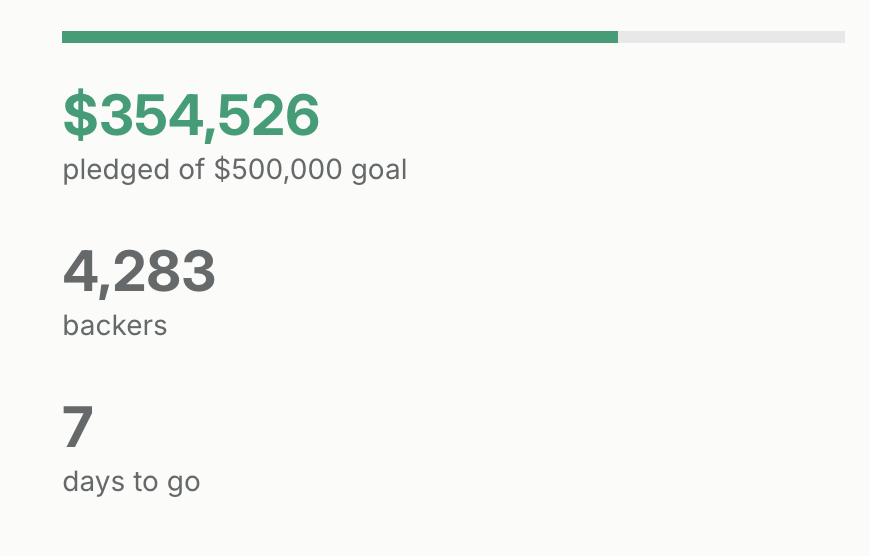
They are going to need someone with deep pockets since they’ve run the course with the add-on’s and looking at the numbers for the non-limited tiers, the onw with the largest backing is the $80 Hero of Darkhaven. The two lowest limited time tiers ($25) having less than 1300 backers combined AND the current two lowest tiers ($30 and $40) having less than 300 combined backers, highlights one of the issues.
Since this is going to be a buy to play title (and the low end of the Kickstarter is normally the floor for where the actual release price will be; meaning at least $40 and higher but without the rewards), there is little in this campaign that is persuading the free to play demographic of buying into much of what they are trying to accomplish in this genre (and the reputations of everyone including Chris Wilson, isn’t having a huge impact).
As per their interview, the numbers for this Kickstarter plus interest level on Steam (with the wishlisting), are meant to be used for discussions with potential publishers and investors. Less than 5000 backers is problematic if trying to sell the potential angle.
We will see if they can pull it out in this next week.
